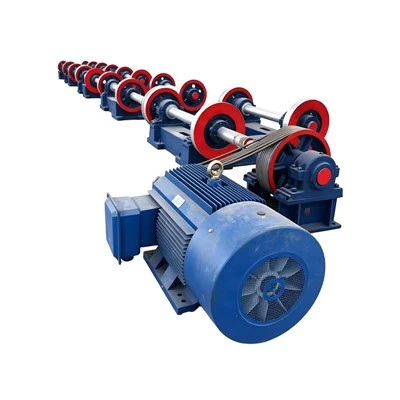
If you’ve ever stepped onto a precast concrete manufacturing yard, chances are you’ve seen the rhythmic thrum of a spun pile centrifugal machine at work—one of the most critical pieces of equipment in producing the hollow, high-strength concrete piles that form the foundation of skyscrapers, bridges, and coastal infrastructure. As a supplier of spun pile manufacturing equipment, I talk to dozens of production managers and small business owners every week asking the same question: Do I need to invest in a separate curing chamber for my spun pile line? It’s a question with no one-size-fits-all answer, but breaking down the science of spun pile curing, the role of your existing equipment, and long-term production goals will help you make a decision that doesn’t cut corners on quality or break the bank.
First, let’s ground this in how spun piles are made, because curing can’t be understood without the full process. The foundation of any spun pile starts with a reinforced cage—built using a concrete pile cage welding machine—slid into a cylindrical concrete spun pile steel mold. That mold is then secured and fed into a spun pile centrifugal machine, where high-speed rotation (up to 1,500 RPM) flings wet concrete evenly against the mold’s inner walls, compacting it and squeezing out excess water to create a dense, uniform hollow pile. The centrifugal step is non-negotiable for strength, but it’s only half the battle; curing is what turns that loose, workable concrete into the rigid, load-bearing material customers rely on.
Curing, for anyone new to precast production, is the process of maintaining concrete’s moisture and temperature over time so its cementitious compounds (portland cement, fly ash, slag) fully hydrate. Skip or rush curing, and you’ll end up with piles that have surface cracks, low compressive strength, or poor resistance to freeze-thaw damage—issues that can lead to costly rework or, worse, structural failures down the line. The core of the question is: can you do this curing step without a dedicated chamber, or is that chamber an essential part of your concrete pile making machine setup?
Let’s start with the case for not buying a separate curing chamber, which makes sense for new, small-scale, or budget-constrained operations. Some producers use ambient air curing, relying on natural temperature and humidity to keep concrete damp as it hardens. In regions with consistent, warm, humid weather—like parts of Southeast Asia, the southern U.S., or coastal Australia—ambient curing can work for smaller orders or low-stakes projects. But here’s the catch: ambient curing is inconsistent. A pile poured on a 90°F, 80% humidity day will cure far faster than the same pile poured on a 60°F, 30% humidity day, and even small fluctuations can lead to uneven strength across your production line. For example, I once worked with a producer in a coastal town who tried ambient curing for 12-inch diameter piles during a dry season; their outer surfaces cured too quickly, trapping moisture inside and causing internal voids that required 15% of their piles to be scrapped. That scrap rate ate into their profits far more than the cost of a basic curing chamber would have.
Another alternative for skipping a dedicated chamber is “mold-in-place” curing, where you leave the spun pile sealed in its steel mold immediately after centrifuging, rather than removing it right away. The trapped moisture inside the mold keeps the concrete damp, and if you wrap the mold in insulation, you can maintain a mild, steady temperature for the first 24 to 48 hours—critical for early hydration. This works well for producers who run short production runs or have limited warehouse space, but it has limits. The mold-in-place method only controls internal moisture, not external factors; if the area around your molds drops below 50°F overnight, the concrete’s hydration slows to a crawl, leading to lower ultimate strength. Also, leaving molds sealed for extended periods can trap carbon dioxide, which reacts with unhydrated cement to form surface carbonation—weakening the top layer of the pile and making it more vulnerable to corrosion from the steel cage inside.
Now, the case for investing in a separate curing chamber, and why most growing spun pile producers land here. A dedicated curing chamber is a controlled environment: you set the temperature (usually between 60°F and 90°F, with a typical peak of 150°F for accelerated curing) and humidity (95% or higher) from start to finish, so every pile gets the exact conditions it needs. This consistency is non-negotiable if you’re targeting projects with strict quality standards—like high-rise buildings, highway overpasses, or offshore wind foundations—where engineers require compressive strength test results within tight tolerances.
But let’s be clear: not all curing chambers are the same. The best ones integrate with your existing equipment, so you don’t have to rearrange your entire production line. For example, a curing chamber can be positioned right after your spun pile centrifugal machine, so once a pile is centrifuged, you roll it directly into the chamber, no extra handling required. Many modern chambers also offer accelerated curing, which cuts total curing time from 7 days (ambient) to 24–48 hours, letting you turn around more orders faster and use less floor space. For producers who want to scale their concrete pile making machine output, this is a game-changer—one of my clients in Vietnam went from producing 50 piles a week to 150 a week after adding a small curing chamber, without expanding their facility.


That said, there are scenarios where you can delay or downsize a curing chamber, but not skip it entirely. If you’re just starting out, focus on refining your process with mold-in-place curing first, then add a compact curing chamber once your order volume hits 50+ piles a week. A lot of new producers make the mistake of buying a huge, industrial-grade curing chamber upfront, tying up capital that could go into improving their spun pile centrifugal machine or expanding their sales team. There are also modular curing chambers available that can be added to your line later, so you don’t have to make a full capital commitment on day one.
Another factor to consider is the type of cement you’re using. If you’re using ordinary portland cement (OPC), which cures faster than blended cements with fly ash or slag, you might get away with a shorter curing period, but you still need controlled conditions. Blended cements, which are more durable and eco-friendly for heavy-duty projects, require a longer curing time (7–14 days) and consistent moisture to fully hydrate—ambient air can’t deliver that reliably. One of my regular customers switched to blended cement for highway projects and saw their scrap rate drop by 10% after adding a curing chamber, even though they had used ambient curing successfully with OPC before.
Cost is, of course, a major factor. Let’s break it down: a basic modular curing chamber costs between $15,000 and $30,000, depending on size and features, while ambient curing only requires a little extra labor to cover piles with damp burlap. But the hidden costs of skipping a chamber are often bigger: scrap rates, rework, missed delivery deadlines, and losing contracts that require certified strength test results. I’ve seen a producer with 20 years of experience lose a $2 million contract because their ambient-cured piles didn’t meet the minimum compressive strength required, a mistake that would have been avoided with a $25,000 curing chamber.
Wait, but let’s address a common misconception: some producers think the steel molds of their concrete spun pile steel mold can double as a curing chamber. You might be tempted to keep piles sealed in the mold, wrap it in plastic, and call that curing—but that’s not enough. Sealed molds trap moisture, but they can’t regulate temperature, and if the mold is left in direct sunlight, it can heat up unevenly, causing thermal stress and surface cracking. Even if you add insulation to the mold, it’s nowhere near as precise as a dedicated curing chamber, which uses sensors to maintain exact temperature and humidity levels across every inch of the pile.
So, what’s the bottom line for you? Let’s summarize:
- If you’re a small, new producer with low order volume, operating in a consistently warm, humid climate, and working on projects that don’t have strict quality standards: You can skip a full dedicated curing chamber by using mold-in-place curing for the first 24 hours, then covering piles with damp burlap for the remaining curing period.
- If you’re a growing producer, working in a climate with variable temperatures, targeting projects with strict quality requirements, or looking to scale your spun pile concrete output: You will benefit from adding a compact, integrated curing chamber that works with your existing spun pile centrifugal machine and concrete pile making machine setup.
- If you’re working with blended cement, targeting heavy-duty infrastructure projects, or operating in a cold climate: A dedicated curing chamber is non-negotiable to meet strength and durability standards.
Now, the important part: if you’re ready to upgrade your equipment, whether that’s adding a curing chamber, investing in a more efficient spun pile centrifugal machine, or expanding your line with a concrete pile cage welding machine, our team is here to help. We don’t sell one-size-fits-all solutions—we work with you to assess your current setup, production volume, and long-term goals to recommend the right equipment, whether that’s a full industrial curing chamber or a modular unit that fits your budget. We also offer guidance on process adjustments to get the most out of your equipment, so you can produce high-quality spun piles without unnecessary costs.
If you’re ready to discuss your specific needs, don’t hesitate to reach out to our team to talk through how curing fits into your overall concrete pile making machine operations. We can walk you through our range of equipment, from spun pile centrifugal machines to concrete spun pile steel molds, and help you make a decision that grows your business, not just your costs.
References
- American Concrete Institute. (2019). Practice for Curing Concrete (ACI 308-19). Farmington Hills, MI: American Concrete Institute.
- Precast/Prestressed Concrete Institute. (2021). Design and Production of Precast Spun Concrete Piles. Chicago, IL: Precast/Prestressed Concrete Institute.
- Malhotra, V. M. (2002). High-Performance Concrete: Materials, Properties, and Performance. Ottawa, ON: Canadian Research Council.
- British Standards Institution. (2018). Specification for Concrete Piles (BS EN 12699:2018). London, UK: BSI.