If you’ve ever driven down a rural road or walked through a suburban neighborhood, you’ve likely passed the tall, grey concrete poles holding up power lines, streetlights, and communication cables. What you might not realize is that those poles don’t just pop into existence—they’re the result of a precise, controlled curing process, and that process starts long before the concrete is even poured. As a supplier of concrete pole making machinery, I get asked all the time: “What makes a good concrete pole, and why does curing matter so much?” Today, I’m breaking down exactly how we use our equipment to turn raw materials into durable, long-lasting concrete poles, step by step.

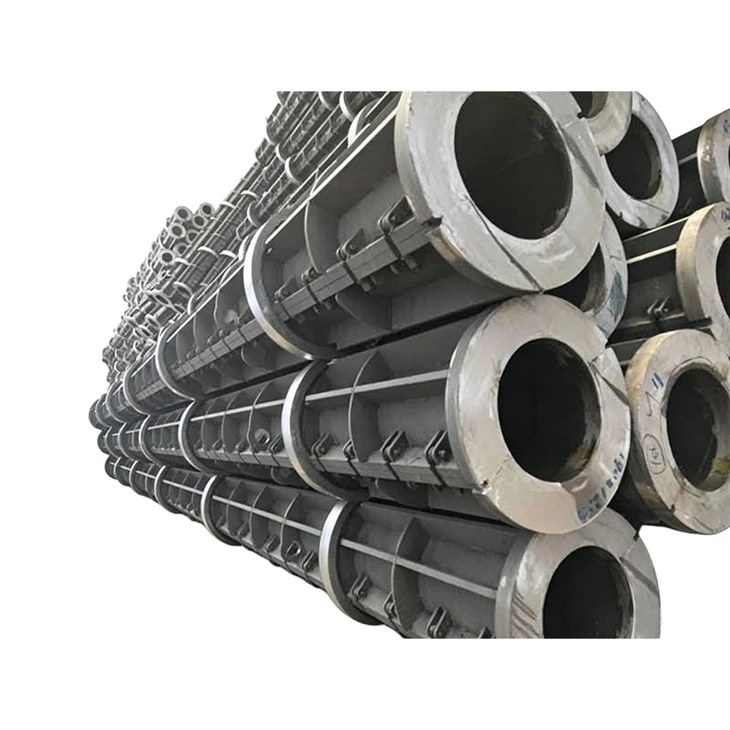
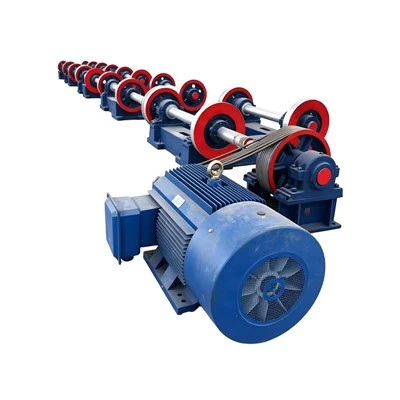
First, let’s set the stage: before curing even begins, you need the right machinery and prep work. A lot of people overlook this, but the quality of your curing starts with the tools you use to shape the pole. Our go-to piece is the Concrete Pole Centrifugal Spinning Machine (/concrete-pole-machine/concrete-pole-centrifugal-spinning-machine.html)—it spins the wet concrete at high speeds to remove air bubbles, creating a dense, uniform structure that’s critical for strength. Without that step, your concrete will be full of weak spots, and curing can only do so much to fix that. Other essential pieces include the Concrete Pole Steel Mold (/concrete-pole-machine/concrete-pole-steel-mold.html), which gives the pole its shape, and the Concrete Pole Welding Machine (/concrete-pole-machine/concrete-pole-welding-machine.html), which assembles the steel rebar cage that acts as the pole’s backbone. Even the Cement Pole Making Machine (/concrete-pole-machine/cement-pole-making-machine.html) plays a role, as it streamlines the entire production line to keep consistency high. But again—curing is where the magic happens to lock in that strength.
Let’s start at the beginning of the curing process, though: right after the pole is shaped via centrifugal spinning. The first stage is called “initial curing,” and it’s all about protecting the fresh concrete as it gains its first bits of strength. When we pour the concrete into the steel mold and spin it, the concrete is still workable—if we exposed it to extreme temperatures, wind, or sunlight right away, it would dry out too fast, a problem we call “plastic shrinkage cracking.” That’s why, immediately after spinning, we cover the molds with insulated hoods or place them in a temporary enclosure. The goal here is to maintain a consistent temperature—around 15 to 25 degrees Celsius (59 to 77 degrees Fahrenheit)—and keep the humidity high enough that the water in the concrete mix doesn’t evaporate too quickly. For most poles, this initial curing lasts 6 to 12 hours. It’s not enough for the pole to be fully strong, but it’s enough that we can carefully handle the mold without deforming the shape. I’ve seen new operators skip this step, and within a week, those poles would develop tiny surface cracks that make them 30% more likely to fail under wind loads. It’s a small step, but it’s non-negotiable.
Once the initial curing is done, we move to the second stage: steam curing. This is where our Concrete Pole Making Machine (/concrete-pole-machine/concrete-pole-making-machine.html) really shines, because it’s designed to control every detail of the steam curing process. Steam curing works because heat accelerates the chemical reaction between cement and water—called hydration. Without enough heat, hydration happens slowly, and the pole takes weeks to reach full strength. With controlled heat, we can cut that time down to days, which is essential for production volume. But it’s not just cranking up the steam. We follow a strict schedule: first, a “warm-up” phase where we slowly increase the temperature over 2 to 3 hours, up to 50 to 60 degrees Celsius (122 to 140 degrees Fahrenheit). If we jump straight to high heat, the outer layer of concrete will harden quickly, trapping water inside that can’t hydrate properly, leading to internal cracks. Once we hit the target temperature, we hold it steady for 8 to 12 hours—this is where most of the strength is gained. Finally, we do a “cool-down” phase, lowering the temperature over 2 to 4 hours so the concrete doesn’t experience thermal shock, which would cause cracks. I always tell customers that the steam curing schedule is like baking a cake—too hot too fast, and it’s raw on the inside and burnt on the outside; too slow, and it’s dry and crumbly.
Wait a second—why is hydration so important, anyway? Let me explain for anyone who might not be familiar with concrete science. When cement mixes with water, it forms a paste that coats the sand and aggregate (the small stones in the mix). Over time, that paste hardens, binding the whole mixture together into a solid rock-like material. But hydration isn’t a one-time thing—it continues as long as there’s water available. That’s why, even after steam curing, our poles aren’t done. We have a third stage called “moist curing,” which happens once we’ve removed the steel mold from the pole. At this point, the pole has reached about 70% of its design strength, but to get to 100% (or even 95%, which is what most industry standards require), it needs to stay moist for at least 7 days. How do we do that? We either: spray the poles with water every 2 to 3 hours, keep them in a water bath for the entire 7 days, or cover them with plastic sheeting that traps the moisture from the initial wet concrete. Again, we use our machinery to help here—many of our Cement Pole Making Machine lines integrate automated moist curing stations so operators don’t have to manually spray every pole, which saves time and ensures consistency. I’ve had a customer in Texas who tried skipping moist curing to save money, and within a year, 15% of their poles developed surface scaling (flaking) because the concrete didn’t get enough water to finish hydrating. That’s a costly mistake—replacing 15% of utility poles isn’t cheap, and it’s a safety hazard.
Now, let’s talk about common variables that can throw off the curing process, because it’s not one-size-fits-all. The size of the pole matters a lot. A small 8-meter residential pole has a different curing schedule than a 15-meter heavy-duty pole for highways. Larger poles have more concrete mass, so they take longer for heat and moisture to penetrate the center. That’s why our Concrete Pole Centrifugal Spinning Machine has adjustable speed settings—faster spins for larger poles to ensure even concrete distribution, which helps the curing process work uniformly. Temperature and humidity of the environment also play a role. In places like Alaska, where winter temperatures drop below freezing, we have to adjust the initial curing to keep the concrete above 0 degrees Celsius; otherwise, the water in the mix freezes, expanding and cracking the concrete from the inside. In places like Saudi Arabia, where summer temperatures hit 45 degrees Celsius, we have to add more breaks to the moist curing to make sure workers don’t get heatstroke, or use automated misting systems to keep the poles cool. It’s all about adapting the process to the local climate, and our machinery is designed to handle those adjustments.
Another thing I want to mention is quality testing during curing. We don’t just guess if a pole is cured properly—we test it. For every batch, we take small concrete cubes made from the same mix, cure them alongside the actual poles, and test their compressive strength at 3 days, 7 days, and 28 days. If the cubes don’t meet the required strength thresholds, we adjust the curing time or temperature for the next batch. Some of our more advanced Concrete Pole Making Machine systems even have sensors that monitor the temperature and humidity inside the curing chamber in real time, alerting operators if something is off. This level of control is what separates a good, reliable pole from a one that might fail prematurely. I’ve seen competitors skip this testing to save time, and their clients end up with poles that only last 20 years instead of the 50-year lifespan they should. That’s why I always emphasize: curing isn’t just a step—it’s the most critical part of making a concrete pole that will stand up to hurricanes, heavy snow, and decades of sun.
Let’s also address a question I get a lot: can you speed up curing even more? For small orders, maybe, but we don’t recommend it for large-scale production. The goal isn’t just to get the pole done quickly—it’s to get a pole that meets safety standards. If you crank up the steam to 70 degrees Celsius instead of 60, you might cut curing time by a few hours, but the concrete will have lower long-term strength. The American Concrete Institute (ACI) has strict guidelines for concrete pole curing, and we make sure our machinery is aligned with those guidelines. The ACI says that moist curing should last at least 7 days for structural concrete, and steam curing shouldn’t exceed 65 degrees Celsius to prevent thermal damage. Following those rules isn’t optional—it’s what keeps utilities, construction companies, and the public safe.
Now, let’s wrap this up with why all of this matters for our customers. If you’re a utility company or a concrete pole manufacturer, investing in quality curing equipment (like the Concrete Pole Centrifugal Spinning Machine, Concrete Pole Steel Mold, and full Concrete Pole Making Machine line) pays off in the long run. You’ll have poles that last longer, require less maintenance, and don’t have to be replaced every few years. You’ll also comply with safety standards, which can save you from costly lawsuits or project delays. I’ve worked with hundreds of manufacturers over the years, and the ones that take curing seriously are the ones that stay in business for decades. The ones that cut corners? They’re the ones calling me a few years later, asking how to fix their cracked poles.
If you’re in the market for concrete pole making machinery, or you want to learn more about how our curing process works in practice, I encourage you to reach out. We don’t just sell machines—we provide support, training, and customized solutions for every client’s needs. Whether you’re making small residential poles or large highway poles, we have the equipment and expertise to help you produce high-quality, durable concrete poles. Contact us today to discuss your project and find out how our machinery can streamline your production and improve your pole quality.
References
- American Concrete Institute (ACI). (2019). Standard Practice for Curing Concrete (ACI 308-19). Farmington Hills, MI: American Concrete Institute.
- Neville, A. M. (2011). Properties of Concrete (5th ed.). Pearson Education.
- Concrete Pole Manufacturers Association (CPMA). (2022). Best Practices for Concrete Pole Production and Curing. Washington, D.C.: CPMA.
- Ramamurthy, K., & Sathyan, D. (2018). Durability of Concrete Poles: Curing Effects. Journal of Sustainable Construction Materials and Technology, 3(1), 45-62.