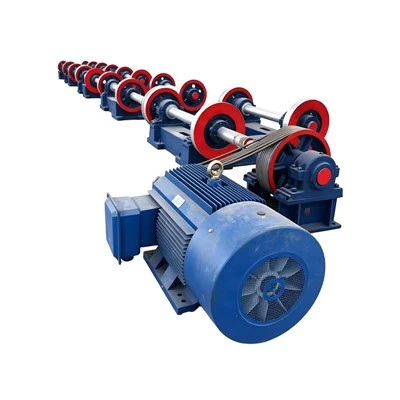
If you’ve ever driven down a rural road or through a suburban neighborhood, you’ve likely passed the tall, cylindrical structures holding up power lines, streetlights, or even traffic signals: cement (or concrete) poles. These unsung heroes of infrastructure don’t just appear out of thin air—they’re manufactured using specialized machinery designed to turn raw concrete into durable, uniform poles that can withstand harsh weather, heavy loads, and decades of use. As a supplier of cement pole making machines, I’ve spent years helping manufacturers choose the right equipment for their specific needs, and one of the most common questions I get is: “What types of machines do I actually need to produce high-quality cement poles?”
Let’s break this down in plain, practical terms—no overly technical jargon, just the kind of insights I share with clients looking to start or expand their cement pole production lines. Every stage of the manufacturing process relies on a specific type of machine, and skipping or cutting corners on any of these will lead to poles that crack, bend, or fail prematurely. Whether you’re making small residential poles or large utility poles for highways, understanding the different machine types is key to building a profitable, reliable operation.
First, let’s start with the backbone of the entire process: the core production unit, the Concrete Pole Making Machine. This is the central piece of equipment that combines all the necessary steps into a single, automated or semi-automated line. When I work with new clients, I often direct them to our detailed page on the Concrete Pole Making Machine, which explains how these systems handle everything from raw material mixing to final curing. Unlike older, manual setups, modern cement pole making machines reduce human error, speed up production, and ensure every pole meets consistent standards. For example, automated lines can produce 50 to 100 poles per shift, depending on their size, whereas manual setbacks might only make 10 to 15. That efficiency is why so many growing manufacturers invest in a full production line early on.
One critical component that directly impacts the strength of a cement pole is its structural integrity, especially when it comes to the steel reinforcement inside. Without proper reinforcement, a concrete pole is just a heavy, fragile cylinder. That’s where the Concrete Pole Welding Machine comes in. This machine is used to fabricate the rebar cage—the internal skeleton that gives the pole tensile strength (the ability to resist bending forces). Unlike welding by hand, which can lead to uneven welds or weak points, a dedicated concrete pole welding machine builds rebar cages with precise, uniform spacing between each steel rod and consistent welds at every joint. This is non-negotiable for poles that need to hold up 24/7 utility lines or support heavy equipment. I always tell clients that skimping on a good welding machine is the fastest way to end up with poles that fail under load, which will cost you far more in repairs and replacements than the machine itself.
Next, the step that gives cement poles their signature smooth, dense texture and uniform shape is centrifugal spinning. This is where the Concrete Pole Centrifugal Spinning Machine enters the picture. Here’s how it works: after the rebar cage is placed inside a steel mold (more on that in a minute), the mold is filled with wet concrete, then spun at high speed horizontally. The centrifugal force pushes the concrete evenly against the inner walls of the mold, squeezing out excess water and air bubbles. The result is a dense, low-porosity pole that’s stronger, more durable, and less likely to crack over time. I’ve seen poles made without centrifugal spinning that develop surface cracks or internal voids within a few years—something that’s completely avoided with this process. For smaller-scale producers, there are even semi-automated centrifugal spinning machines that are more affordable, while large utility pole manufacturers often use fully automated, high-capacity units.
Speaking of molds, the Concrete Pole Steel Mold is another essential, often overlooked, part of the process. Think of a pole as a cookie, and the steel mold as the cookie cutter—except this “cutter” needs to be precise enough to produce poles that are perfectly cylindrical, with consistent wall thickness and no misalignments. These molds are typically made from heavy-duty steel that can withstand hundreds, even thousands, of spins and curing cycles without warping or rusting. We manufacture molds in all standard sizes, from 4-meter residential poles to 18-meter high-voltage utility poles, and we also offer custom molds for clients who need non-standard pole dimensions. A common mistake new operators make is buying cheap, low-quality molds that warp after just a few uses—leading to uneven pole walls, inconsistent diameters, and wasted concrete. Investing in high-quality steel molds pays off in the long run by reducing waste and ensuring every pole is uniform.
Now, let’s talk about how all these machines work together in a typical production line. Let’s walk through the process step by step to make it concrete (pun intended): first, raw materials (cement, aggregate, water, and admixtures) are mixed in a batching plant, which feeds into the Concrete Pole Making Machine. Inside the machine, the operator places a pre-fabricated rebar cage (made using the Concrete Pole Welding Machine) into the Concrete Pole Steel Mold. The mold is then sealed, attached to the Concrete Pole Centrifugal Spinning Machine, and spun at high speed for 10 to 20 minutes. During this spin, centrifugal force distributes the concrete evenly, and vibration (a feature many spinning machines include) helps settle the concrete further. After spinning, the mold is moved to a curing area—usually a steam curing chamber, which speeds up the curing process from days to just a few hours. Once cured, the mold is opened, and the finished cement pole is removed, ready for transport and installation.
Wait a minute, did I miss any machine types? Some clients ask about finishing machines, and while those are less common for large-scale production, smaller operations might use basic grinding or painting machines for cosmetic finishing, but those are supplementary, not core. The key core machines for any cement pole production line are the concrete pole making machine, welding machine, centrifugal spinning machine, and steel molds. I always advise new manufacturers to start with a semi-automated line if their budget is tight, then upgrade to fully automated as their production volume grows. For example, a semi-automated line might require an operator to manually place the rebar cage into the mold, while a fully automated line can handle that step, load the mold onto the spinning machine, and even transport the cured pole to storage.
Another thing I emphasize to clients is matching the machine type to your end product. If you’re making small poles for streetlights in residential areas, a centrifugal spinning machine with a smaller capacity will work perfectly, paired with lighter steel molds and a semi-automated welding machine. If you’re targeting large utility poles for power companies, you’ll need a heavy-duty centrifugal spinning machine, thick-walled steel molds, and a high-speed welding machine that can produce large rebar cages quickly. Choosing the wrong machine for your product size is a costly mistake—you’ll either be under-producing poles that meet demand or wasting money on capacity you’ll never use.
Let’s address a common concern I hear: “Are these machines too expensive for a small business?” The truth is, there are options for every budget. We offer entry-level semi-automated cement pole making machines for startups that are just getting into the industry, mid-range lines for growing manufacturers, and full-scale automated lines for large utility suppliers. The concrete pole steel mold, for example, is a one-time investment that lasts for years, while machines like the centrifugal spinning machine have a long lifespan with minimal maintenance. I always recommend working with a supplier who can help you calculate your production needs, budget, and target market to find the right combination of machines—not just sell you the most expensive line.
Now, if you’re ready to start or upgrade your cement pole production, it’s important to choose a supplier that understands the process inside and out, not just sells equipment. As someone who’s been in this industry for over a decade, I’ve seen manufacturers succeed when they have the right tools, and struggle when they cut corners. Whether you need more information on the concrete pole making machine, details about our concrete pole centrifugal spinning machine, specifications for our concrete pole steel mold, or questions about our concrete pole welding machine, our team is here to help. We also provide installation, training, and after-sales support to make sure your production runs smoothly from day one.


I’ve worked with dozens of clients, from small local manufacturers to large national infrastructure companies, and the biggest takeaway I can share is this: the quality of your cement poles starts with the quality of your machinery. Investing in reliable, properly sized equipment will not only produce stronger, longer-lasting poles but also reduce downtime, lower production costs, and help you meet the growing demand for infrastructure projects around the world.
If you’re ready to discuss your cement pole making machine needs, get in touch with our team to learn more about our product lines and find the perfect solution for your operation. Whether you’re just starting out or looking to expand, we’re here to support your journey every step of the way.
References
- American Concrete Institute. (2021). Standard Practice for Manufacturing Concrete Poles. ACI 318-19: Building Code Requirements for Structural Concrete.
- Portland Cement Association. (2020). Cement Pole Production: Best Practices for Durability and Efficiency. PCA Infrastructure Report Series.
- International Association of Structural Engineers. (2022). Centrifugal Spinning in Precast Concrete Manufacturing: A Technical Review. IASE Journal of Structural Precast Design.
- Precast/Prestressed Concrete Institute. (2021). Guide to Specifying Concrete Poles for Utility and Municipal Applications. PCI Practice Manual.